Compiled from experience, this is a great article on everything to do with beta readers. Follow the link to Val’s page and the entire piece. Enjoy!~
What are they? People who read your polished manuscript (do not send them your shitty first draft) and give you feedback. Ideally they should be readers, NOT other writers, though that can be harder to come by. How many do you need? Depends on where you are in your writer journey. If you’re a newbie, […]
Hope everyone is staying safe and making the best of the challenging situation we are facing. You can find the full article on Writer Unboxed by following the link below, ’cause who can’t use a Scrivener refresher? I’m taking a mini-course this afternoon myself!
Do you use Scrivener when you write? Do you like it, love it, feel vulnerable when you use it? Let me know in the comments below. I’m in the 🧡🧡🧡🧡 category myself 🥰.
Stop by later for the next installment in Eleanorah Starr’s Collection of Huphaea post series, you won’t want to miss it!
Whether your home office has been invaded and you have little time to write, or you suddenly find yourself with nothing but writing time, I’ve pulled together a motley collection of handy features that every Scrivener user should know about. NOTE: When the process differs between versions, I’m using S1, S2, and S3, to denote…
“My aim is to equip you with a giant bag of prose tricks.”
“…take my must-dos and must-not-dos with several pinches of salt and a dash of gin.”
Sacha Black, The Anatomy of Prose, pg 2.
** I was given an ARC of this book by the author and I HAPPILY leave this review.**
Writing is a creative activity that can be both uplifting and weighty. So many writers feel the need to ‘have everything perfect’ the first time it is on paper and that pressure is substantial. Craft books exist by the hundreds, but the really valuable ones impart so many tips and reminders that they become references- all dog-eared, flagged, and stained.
It is FULL of writing tools, from cover to cover, presented in the humor-laden style unique to Sacha Black. The witty, often sarcastic jibes only serve to sear the points into the writer’s mind, and if that isn’t enough, the entire last chapter is a condensed review of the book, perfectly suited to reference on the fly! Brilliant!
One of the aspects I appreciate most about the book is that Sacha Black drives home the point about language being an array of tools that are at a writer’s disposal. Metaphors, similes, points of view, and tense may have been annoyances in English class, but now they are devices authors can wield with confidence in the name of writing their best book.
If you don’t believe me, buy the book and try it out yourself. I know your mind will change!
This book is not for the proper-at-heart, however, the author’s fondness for ‘bad words’ and colorful phrases are well documented on her podcast, TheRebel Author Podcast, which is also full of writing tips, tricks, and lively interviews. I find her style engaging, fun, often hilarious, but always real and thought-provoking. She continues to inspire writers and authors on- and off-the-page all over the globe. Rebel Authors everywhere will attest–read the books, take the steps (all of them!) and you will succeed! The Anatomy of Prose: 12 Steps to Sensational Sentences is highly recommended!
“My aim is to equip you with a giant bag of prose tricks.”
“…take my must-dos and must-not-dos with several pinches of salt and a dash of gin.”
Sacha Black, The Anatomy of Prose, pg 2.
** I was given an ARC of this book by the author and I HAPPILY leave this review.**
Writing is a creative activity that can be both uplifting and weighty. So many writers feel the need to ‘have everything perfect’ the first time it is on paper and that pressure is substantial. Craft books exist by the hundreds, but the really valuable ones impart so many tips and reminders that they become references- all dog-eared, flagged, and stained.
It is FULL of writing tools, from cover to cover, presented in the humor-laden style unique to Sacha Black. The witty, often sarcastic jibes only serve to sear the points into the writer’s mind, and if that isn’t enough, the entire last chapter is a condensed review of the book, perfectly suited to reference on the fly! Brilliant!
One of the aspects I appreciate most about the book is that Sacha Black drives home the point about language being an array of tools that are at a writer’s disposal. Metaphors, similes, points of view, and tense may have been annoyances in English class, but now they are devices authors can wield with confidence in the name of writing their best book.
If you don’t believe me, buy the book and try it out yourself. I know your mind will change!
This book is not for the proper-at-heart, however, the author’s fondness for ‘bad words’ and colorful phrases are well documented on her podcast, TheRebel Author Podcast, which is also full of writing tips, tricks, and lively interviews. I find her style engaging, fun, often hilarious, but always real and thought-provoking. She continues to inspire writers and authors on- and off-the-page all over the globe. Rebel Authors everywhere will attest–read the books, take the steps (all of them!) and you will succeed! The Anatomy of Prose: 12 Steps to Sensational Sentences is highly recommended!
If you are considering adding audio to your author business, Audio for Authors is a must-read. Then decide!
Think you might be interested in audio? Look in here to see why you should be.
I have been interested in narrating audiobooks for quite some time now, in fact, I already have the equipment, a homemade audio booth that sits on my desk, and I’ve created an ACX account. Why haven’t I taken the plunge? The main reason: Time.
I read aloud A LOT. It is one of my favorite things to do when I am pleasure-reading. My dogs appreciate it, and for me it is about how the words come to life when spoken aloud. Narration is certainly something I want to add to my freelance word services business, but in addition to the time factor, I allowed myself to be stymied by the editing process. Recently, I took two more online courses through LinkedIn on using the software, and I gained a much better understanding of it. It doesn’t appear to be as difficult as my brain would have me think.
Joanna Penn’s The Creative Penn Podcast has been a staple of my subscriber library since I started listening regularly to podcasts over the past year. She is at the forefront of the indie publishing industry and a super successful entrepreneur. I find her episodes insightful, honest, and certainly thought-provoking. More often than not I remove my earbuds only to think, “Now how can I apply that to what I am doing?”
I ordered Audio for Authors shortly after it was released. It had been recommended to me by another podcaster as well, Sacha Black over at The Rebel Author Podcast and Next Level Authors, so it was a no-brainer to add it to my cart. Then the Coronavirus hit, and I got nervous that it wouldn’t show up forever, but to my delight it arrived quickly and on time!
The first thing I noticed about the book was the three-part organization: Audiobooks, Podcasting, Voice Technology. Can it get any more succinct than that? Each section discusses the topic thoroughly and in a manner that you can easily return to for reference- it’s all spelled out in the titles of the sections. The tips and steps are infused with the author’s own experiences over her 10+ years in podcasting, which made it all reachable for me. She shares her own techniques and reasons for the software, platforms, technology, and hardware she uses, passing along lessons and time-savers freely. I have to say my own confidence increased markedly, as did my enthusiasm!
I finished the book over a week or two, absorbing it in small increments. The Audiobook section amped up my desire to narrate again and I recorded a short cut of one of The Collection of Huphaea posts on this blog (see CoH post #0). The Voice Technology chapters were informative and illustrate how forward-thinking Joanna Penn is in her business planning. The AI voice advances are something all authors should be keeping an eye on for use in several different ways to create income streams.
But it was the Podcasting section that really hit home and made me think.
“… if you are only marketing your book through written media, you will not reach a reader like me. And I am certainly not alone.”
Joanna Penn, Audio for Authors, pg 103.
This line alone sparked an idea, and now I am beginning to put the pieces together to start my own podcast for The Collections of Huphaea. Eeeeek! In general, I have trouble listening to the sound of my own voice, but she also points out that other people won’t hear my voice the same, so what I think doesn’t matter. Bingo! That was what I needed to hear. Yeah, podcasting. I’m diggin’ it.
The prose is light and conversational, it’s very easy to sit down and consume in large chunks. There are websites and links given (super helpful in the ebook) and plenty of resources listed in the back of the book for readers to follow up with. Joanna Penn is thorough in providing information, making Audio for Authors a reference for a burgeoning industry.
I highly recommendAudio for Authors for anyone thinking about adding audio to their marketing activities. Happy reading, and if you finish the book with a microphone in your hand, I won’t be surprised!~
I re-blogged this post from a fellow freelancer because it got the brainstorming juices flowing about my own new business situation. It is a very well done infographic by BigrockCoupon that I thought others may find useful too. Drop a comment below if you do any of these tips in your marketing scheme, or want to add them to your plan. I am definitely going to consider it!~
Did you know that a great way to promote a business is through an ebook? As regular readers of this blog know, I have been focusing on freelance writing this past couple of years. So, this is a tip that may be of particular interest to non-fiction writers and anyone else who is looking to […]
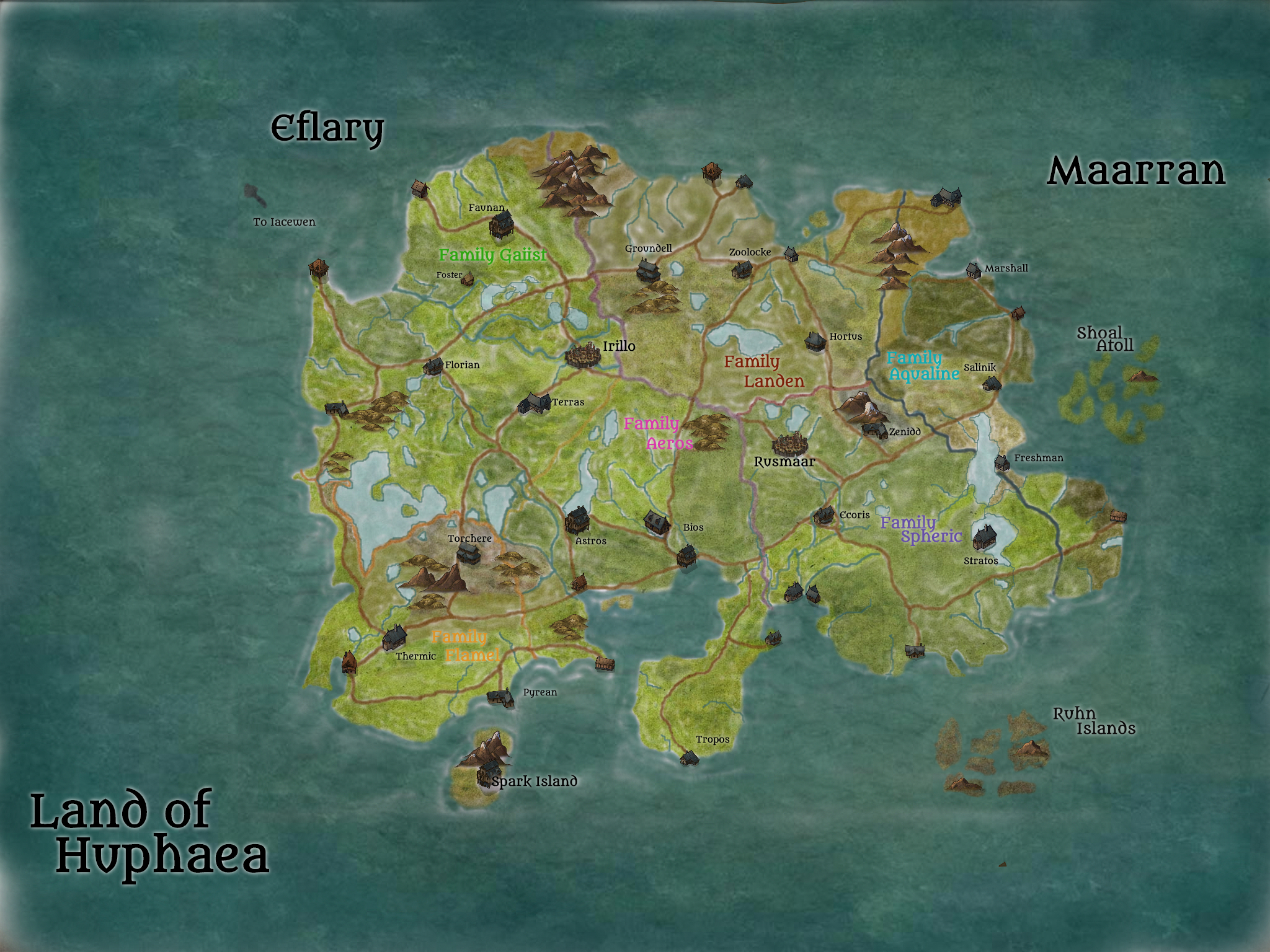
I stumbled upon Inkarnate one day when I was doing an internet search for mapmaking options. I already had the map for my fantasy land on a plain piece of white paper, but I wanted it to look authentic—with landforms, oceans, forests, roads, and settlements delineated and in color if possible. There is nothing I like more than opening up a fantasy book cover and seeing an interesting MAP.
As you can see, it was horribly boring, and woefully underwhelming.
Initially, when I opened up Inkarnate (free-version), I was thrilled! Here was a design tool where I didn’t feel like a non-artist (as I am). There was a picture in my mind of a coastline present to the northwest of my central land, and I couldn’t draw it correctly at ALL (ugh). Suddenly with Inkarnate, I could make things appear as I wanted; the maps were not pre-generated like other internet sites I had dabbled with.
I bet you can guess what happened next…
Yeah, before I knew it, it was dark outside and the dogs needed feeding… but I had a NEW MAP!
a couple hours later… the first version of Iacewen
I was so pleased with the result that I decided to take the time and attempt to transfer (freehand) my plain map into Inkarnate. But… I wasn’t so confident about my ability drawing with the mouse. On a whim, I emailed the Inkarnate support team and asked if a scanned document could be imported and modified. And I HOPED against hope that it was.
To my great delight, the answer came back YES with details on how to make it happen! On the next opportunity, I uploaded my bland map, and after several sessions, came out with:
Huphaea: first run
The political lines, roads, rivers and water bodies took time to outline, but I was able to follow my faint lines on the uploaded copy, thankfully. It was really the shading built into the ocean and land textures that made it come alive, though. I was pretty pleased. The icons available in the free version were great, but the pro version held many more choices. After a bit of thinking, I opted to pay the modest yearly price and upgraded to the pro version for the greater variety.
A bit before Christmas, Inkarnate introduced a beta HD version of their new pro upgrade, and I signed up immediately. Once I opened my maps again, the difference was HUGE!
current map of Iacewen under Inkarnate Pro beta HDcurrent map of Huphaea under Inkarnate Pro beta HD
As you can see in the Iacewen map, the icons are FAR more advanced in design, color, and features (volcanoes, snow on the mountains, etc.) The trees are grouped into species, and there are several forms of each to choose from or rotate through to create realistic forests. Every feature can be resized on a 1-100 gradient depending on the scale of your map. These here are in the 25 and less range because my map is large on distance.
The addition of a shadow feature creates depth in any place you enable it, and I have seen some incredibly detailed shorelines other users have made. Along with that, the amount of different stamps in common fantasy categories (elves, orcs, human, goblin, etc) make it possible to create incredibly detailed cities on a very visible scale. Role players have produced some amazing creations, check out the Inkarnatereddit if you are interested in the possibilities.
Two of the better features, I think, are the SAVE reminder and the Path tool. I was happily editing along, and this box popped up in the lower left corner, telling me I had made over 60 edits and it was time to save — wa-wa-wwhhaaatt? Where is that feature in everything else? And you can bet I saved immediately!
The Path tool came a bit too late for me initially, but I was delighted to be able to go back and apply it to my solid road lines. It changed them to a dotted string, and the map came to life! The roads suddenly looked like thoroughfares even without a key. The map started to look like something I would see covering the inside cover of a novel. There are even beautiful scroll-work edges and parchment-like borders you can add to your creation so that it resembles a weather-beaten map.
The differences aren’t as visible on the second Huphaea map, but I notice it in the depth of the land textures. I have quite a bit more to do; undoubtedly I will continue to amend as I go.
If you are an author (especially of fantasy) enmeshed in worldbuilding, or an RPGer, hop on over to Inkarnate and play around for a few minutes, then tell me you aren’t hooked. I highly recommend Inkarnate for anything you need to map out, even if it’s only to keep it straight in your head while you write. Sorry about the rabbit hole, though…
sorry, not sorry…
On second thought, nope, I’m not. Happy mapping!~
What have you used to map your world? Have you made a physical copy, or prefer to keep it in your head? Leave a comment below, I’d love to know your thoughts about maps and creating them!~
Good Monday morning All! I can honestly say that it is a good Monday morning so far — looking out my office window into bright sunshine on new snow, I am happy to be sitting at my desk enjoying 15°F on this side of the wall. I still have to walk the dogs, but they are happier if it is closer to 20° too.
This past week proved to be productive in the reading department, so I thought I would share a couple of craft books that ensnared me.
Three of the many in my TBR or already read piles…
The first one I read was Verbalize, and if you notice all the mini Post-Its sticking out of it, you can conclude that I found it helpful. IMMENSELY helpful! I had heard interviews with author Damon Suede on several podcasts and everything he said about writing from verbs made complete sense, so I had to check it out. I have been in the process of outlining my fantasy novel for a bit now, but it never felt quite right. I just kept thinking that I wasn’t ready for that step yet, that I was still missing something as related to characters and events. So when I started reading Verbalize, I realized, YEAH I sure am missing something — the reasons why my characters are taking this journey and the actions that motivate them. Don’t get me wrong, I had some idea, but nothing I could sustain for very long when trying to plot. After a reading the book and then completing a few of the exercises, I now feel much better about what actually moves and shakes these individuals.
The other two books in the photo were both highly recommended in Verbalize, so I decided to borrow them from my library system first (yes, I am one of those people who still LOVES to use my library), to see if I should/needed to/wanted to purchase them for permanent reference. I’m over halfway through Wired for Story, and I can say that yes, I do believe I will be purchasing it; it is most worthy of mini Post-its and highlighter treatment. Lisa Cron’s book uses many of the same principles as Suede’s, but approaches it from a ‘how-the-brain-works’ perspective. So far it has been entertaining reading, and very instructive in defining the theme characters take action on, whether they know it or not.
I haven’t actually gotten to Vex, Hex, Smash, Smooch yet, but if it is anywhere in the same vein as the other two, it will also be a solid read. I will post an update as I get into this book, which should be soon (cause it isn’t mine either… yet). Praise to the renewable library loan!
If you hadn’t surmised as such, I am a consummate planner when it comes to writing, and that goes back to the first research paper I wrote in sixth grade — I can still see all my note cards and how they corresponded to my outline, with each piece of information, so that all I had to do was connect them all together with the right words and it was done. That lack of confidence I had every time I sat down to outline was what spurred me to to delve into what I was missing. After a book and a half, I already have a much better handle on the foundation elements of my story. How to work with and refine them to draw the tale, length by length, from the tangled ball of yarn that it is in my imagination. I am so very glad that I read (am reading) these books before lots of words hit the page, but honestly, being a planner, the words wouldn’t have come anyway. Cause now I know there was nowhere for them to come from. HA ha!! <evil villain laugh, with finger in the air> Now the outline begins!~
What craft books have you read that helped you as a writer? Any that changed your whole outlook or approach? Leave a comment below on writing books that you love to recommend. Til next time, happy writing!~
PS. If you haven’t heard about it yet, there is an extension for Google’s Chrome web browser that checks your local library system for a book whenever you query one online. It’s an EXCELLENT tool, I highly recommend it! Then if you like a book, you can always support the author and buy it for yourself. Win-win!
When I pick up a book to read the inner jacket or back cover hook, or if I’m scanning Amazon, Goodreads, Book Sirens, Book Barbarians, any of the myriad places I get my reading material, one of the first things I notice is the name of the protagonist.
What IS in a name?
If I like that particular combination of letters, it ticks a mental box and I am more likely to read on. It doesn’t mean if I don’t like what I see that I won’t investigate further, but I am more likely to continue if I do.
Is that a shallow initial evaluation? Perhaps, but to me it is not. Names have always been a very important and fascinating topic I have explored. It may be some carryover from having a longer, complicated Polish birth surname that was challenging for a four-year-old to learn how to spell. And then add in that my not-unusual first name has an unusual spelling, I have been correcting people from day one. Ugh, <eye rolls>. So maybe then it is all my parents’ fault, but I’m honestly not looking to place blame for something I find fascinating.
My three dogs ( l-r) Dash, Nyssa, and Tristan
So much so, that after I chose Dash for my most recent Aussie boy, and he absorbed the energy of the word 100%, I have kept Zen in the forefront of my mind for the next one… one can hope, right?
Once I was aware enough to make the connection between our mother cows and calves, I made myself responsible for remembering who-went-with-who and their names. Names were chosen for any number of reasons, but never just arbitrarily. There was always a meaning, time period, or reference that inspired the choice. We even had twins born one winter on the day of the Super Bowl that gave us Raider and Redskin. My dogs are no different, it is a part of welcoming a new family member that I take very seriously.
I could fill this room with names…
It should come as no surprise then if I say that one of the reasons I want to write a fantasy novel is that I want to NAME characters, countries, cities, castles, forests, lakes—all of it! And through the naming, each person, creature, and location becomes real to me; in my mind and on paper (or screen) they now have an existence and can be interacted with. One of the most fulfilling blocks of time I spent two weeks ago was naming all 54 of the cities/towns and their House Seats of the family scion that resides there.
Yeah, I said that—54 scion residences and 54 cities or towns. 108 names, and I loved every single minute of it over the three days it took me. Is that excessive? Possibly, but its part of my world building and though I don’t know when I will write any of them in, they are in existence waiting to be deployed. These locations give some structure to my world; physical destinations I can make things happen in, talk about in dialogue, and use as landmarks.
The power in a name, I believe, comes from the interaction of the energy of the word with our own energy. At our most fundamental state, we are beings of energy, and energy flows in waves like sound, or light, or as depicted by the ripples in this pond. A word is a series of sounds (energy waves) made by our vocal cords. The waves interact with those comprising ourselves each time they are spoken (and perhaps even on a really infinitesimal level, thought) enhancing, nullifying, and interfering according to their amplitude, wavelength, and frequency. That energy becomes part of us, at least it makes sense to me that it does.
Take my dog Dash as an example. I chose that word, that verb actually, for his name thinking I would return to training dog agility and compete with him, and for the boy in The Incredibles, one of my favorite movies. I wanted something short, catchy, distinctive in sound that embodied quickness and speed. We never got to the agility due to an injury, but he still spends his days zipping around the yard, under his Akita sister, bouncing off her as they play, careening after squirrels at the very end of his leash, and making himself disappear under the trundle when I go out for an evening. He dashes everywhere, his legs take him distances in negative amounts of time it seems. Every time I call his name a blur of red fur appears, wiggles, smiles, but never stops moving. He is Dash- the energy of the word, the meaning, the embodiment of the sound. Now I’m sure somewhere there is a Dash who lazes around on the couch, but my experience has been the opposite. So I dare you, name something Trek and see if you spend your days eating bon-bons in front of the TV together. My money’s on NO…
Consequently then, when I read the blurb of a book and encounter the character’s name, I am interacting with the energy of the word. If it is an energy that resonates positively, if it rolls off the tongue easily (I actually do read aloud quite a lot), if the squiggles of the letters look good on the page, I will continue my perusal. I am investing my time as a reader, after all, so I want to be able to pay attention and not be distracted by a name I can’t pronounce for however-many-hundred pages. That said, if it is included in the book, you can bet I will use the glossary and/or pronunciation guide. I am a BIG fan of those add-ins (can you tell I read A LOT of fantasy?) Give me some energy to work with from the outset and I’m all in. Names DO have power. ~
Do you experience names in a similar manner? What energy do the names your characters, or some of your favorite characters, contain? How do you come up with names in your works? I’d love to hear your thoughts, drop me a comment below. Until next time, write on! ~




 The Sun, a Book, and a Dog